Sara Noelle Delgado
Teaching Rescources
Portfolio of Educator Recourses:
Curriculum, Demonstrations and lesson Plans
Art Education inspires creativity and pushes students to care about how they see and interact with the world.
Art is vital
it is a necessary experience. Art pushes our ability to think outside the box, to look at the world differently, and move forward creatively. Art allows us to express ourselves in ways we might not be able to otherwise.
Art education is essential because of its capacity to teach students to think creatively, critically, and to find an outlet for expression.
My goal is to provide young people with the artistic skills to channel their emotions in productive outlets that promote personal & emotional growth
My top two rules in class are:
1. Try your best: participate and engage creatively
2. Make the most of it: find an avenue for joy and expression in every class.
These rules are essential in teaching art because they foster perseverance and motivation in the art-making process.
Building an inclusive, culturally responsive curriculum that celebrates and honors my students’ diverse backgrounds and experiences, I aim to empower students to see themselves as capable artists, creative thinkers, and strong humans, helping them achieve that engagement and that joy.
Teaching Philosophy
Sample Curriculum Resources


SAMPLE UNIT:
Intro To Portraits
Students will be introduced to the idea of portraits using examples from Chuck Close, Kehinde Wiley & Frida Kahlo
Students will hone the skills they've gained over the year and turn them to painting people.
3 portraits in 3 styles.
By being exposed to different artists and styles and art periods, students will learn about portrait painting and its importance throughout different cultures and across history.

Rationale
Being able to paint a person, paint a portrait is the culmination of all the skills we've learned throughout the year. Portraits are an essential part of human History, culture and art history. Before cameras, portraits were how we captured the likeness or essence of our loved ones, how we immortalized great and important people, or at least the people we felt were important. That's still the case, but post the invention of the camera, portraits serve to convey identity, expression, community and story. When done right, portraits can show us fundamental truths about humanity and identity which is what Art is all about.
Each portrait is just as much a portrait of the artist as it is of the subject. So, having the Students end the semester on Portrait painting allows them to fully tap into human expression, others and their own, in a way that unites all the skills they've learned throughout the year. Teaching Portraiture through the techniques and histories of different artists allows the students to choose who and what they think is worthy of immortalizing, thus painting a portrait of themselves.
ESSENTIAL QUESTIONS:
What is a portrait? Why do we make portraits?
How does a portrait reflect and express identity?
How can you as an artist express yourself with portraits?
How can a Portrait convey a story or idea?
What is the role of portraiture across different cultures and history? Who gets portraits done?
How does one's personal, cultural and historical background influence their portraiture?
How does the style in which a portrait is made influence its meaning and impact?

Lesson 1-Intro to Portraits-
The Basics: Chuck Close & Grid Portraits
Lesson Description:
Students will be painting a “Chuck Close” style Portrait of a subject of their choice. This Subject should be someone they admire and look up to, thus representing their aspirations. The students will be introduced to the basics of portraiture, using grid drawings to focus on color mixing, creating value, shade and contrast, while rendering correct proportions.
Students will use value, tints, tones and shades to fill in the grid with individually colored squares that together compose a full portrait of their chosen subject.This Lesson will introduce Students to portraiture in a fun low stakes way, breaking the work down one square at a time.Using the grid method to focus on color and proportion will allow all the students to build those techniques without getting caught up in the details. It will also introduce contemporary portraits as an expression of self and not just a copy of a person.
Lesson Plan
Teacher Tutorial: Grid Drawing Method & Color Mixing
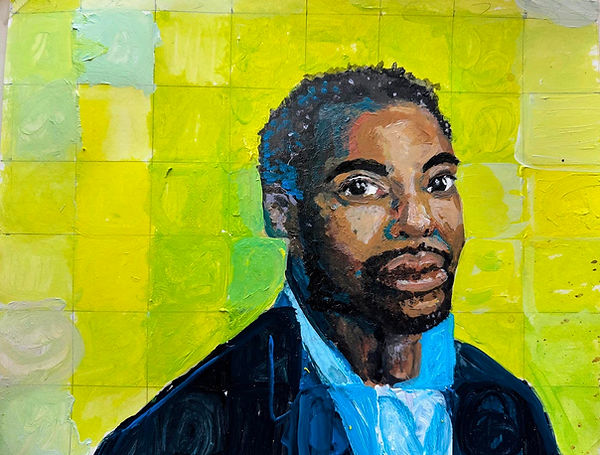
Teacher
Sample
Lesson 2- The Portrait Remixed:
Kehinde Wiley & Contemporary Portraits
Lesson Description:
In this lesson, students will use reference photos of their classmates to paint contemporary portraits in the style of Kehinde Wiley, inspired by classic portraits from centuries past. The students will review and learn about portraiture through the ages and make a contemporary portrait of their classmates, inspired by a classic portrait. They will take and use reference photos and the grid drawing method to render their classmates in a classical pose. They will brainstorm and design a bright patterned background that represents their classmates. In this project they will focus on recognizably rendering a specific person with correct proportions. The project will also focus on designing a specific background pattern that symbolically represents their subject. The Portrait should demonstrate comprehensive use of proportions, shape, pattern, light, shadow and color.
This lesson will familiarize students with more realistic portraiture in an engaging way that, in the style of Kehinde Wiley, ties their contemporary culture to art history. By focusing on Kehinde Wiley, they are exposed to a contemporary working artist who has painted people familiar to them, centering subjects from his community, who look and dress like themselves. Kehinde Wiley is a Black Artist who makes relatable work that also references historical work, perfectly connecting contemporary art to classical portraiture. This allows the students to fully understand how cultural & historical context shapes art.
We will be focussing on painting people from OUR Community so they they can all see themselves as worthy of having a portrait painted of them,
Having the students focus on creating a background that represents/portrays their subject will allow them to be creative and understand that a portrait is not just a copy of a person but should say something about how they are.

Lesson Plan
Ms. Delgado's Kehinde Wiley Artist Bio
Samples Of Kehinde Wiley's Portraits


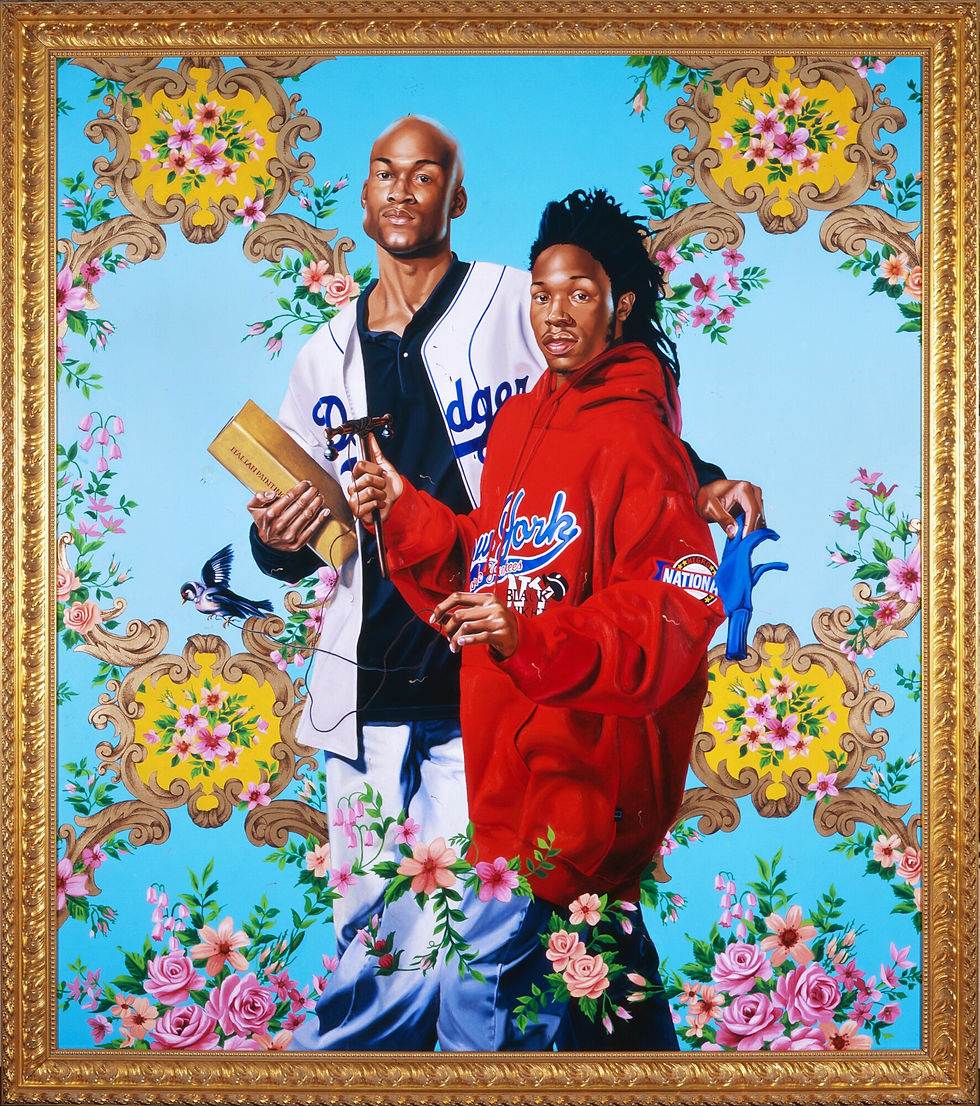


Contemporary Art Meets Art History


Sample "Art History Portraits"
For Students to Remix


Exit Tickets
Lesson 3- The Self Portrait:
Frida Kahlo and Autobiographical Art
Lesson Description:
In the style of Frida Kahlo, students will design and paint a large Self Portrait that expresses their identities and emotions, particularly expressing moments in their life that affected them, whether positively or negatively. They can use any medium/technique that they've learned over the course of the year.
In this lesson we will explore Self Portraits, especially those done in a more stylized, non typical, expressionist manner. We will delve into self portraits such as that of Frida Kahlo, Basquiat and Pablo Picasso. We will discuss how portraits shape and are shaped by our personal histories, journeys, and cultures. We will discuss how you can use portrait painting to tell a story, your story. We will discuss how the style and symbolism of the portrait affects that story to answer the question, “How does one's personal, cultural and historical background influence their portraiture?”
The artist we are looking at, Frida Kahlo, paints vivid self portraits that speak to the inner workings of their hearts and minds. That's what I want for my students, to be able to speak their truths through art, painting their own self portraits as a form of self expression and autobiography.
By having Students react to Frida Kahlo's work (as well as that of others) and analyze her intentions and the story she’s telling with her work, Students will be inspired to tell their own stories and look at art as something that doesn't have to be beautiful but can be the tool we use to express our hurts or our joys, to tell the world about ourselves.
This lesson also pushes Students to think about symbolism and the deeper meaning behind the art, pushing them to think critically about not only the art they see but the art they create.
Frida Kahlo is also a Mexican painter. Teaching in California, I know the majority of my students will be Latino. Teaching about Frida Kahlo allows them to feel seen and represented.

Lesson Plan
Samples Of Frida Kahlo's Self Portraits


Sample Rubric
Samples Of Frida Kahlo's Self Portraits
